A personal loan is a way to get money that you can pay back over time. It gives you an amount of money at once and you pay it back in equal monthly payments for a set time. Unlike things like credit cards personal loans have payments, fixed interest rates and a set schedule making them a popular choice for people who want to feel more secure with their money.
Whether you need to pay off debt cover an emergency fix your home or pay for something in your life personal loans can be a better choice than many other ways of borrowing money.
Understanding Personal Loans
- Main Features of Personal Loans
- Types of Personal Loans
- Common Uses of Personal Loans
- Advantages of Personal Loans
- Potential Disadvantage
Requirement & Eligibility
- Eligibility Requirement
- Factors That Affect Interest Rates
Application & Approval Process
- How to Apply for a Personal Loan
- Personal Loans vs Home Equity Loans
- Personal Loans vs Payday Loans
- Tips for Getting Approved
- Mistakes to Avoid
What Is a Personal Loan?
A personal loan is an installment loan that give you a set amount of money at once. You agree to pay back the amount you borrowed plus interest or any fees through monthly payments for a set time.
Most personal loans are unsecured which means they do not need anything like a house or a car as security. Instead the people who give the loans look at your situation including:
- Credit score
- Income
- Job stability
- Debt to income ratio DTI
- Credit history
The amounts you can borrow usually go from $1,000 to $100,000. This varies by lender.
How Does a Personal Loan Work?
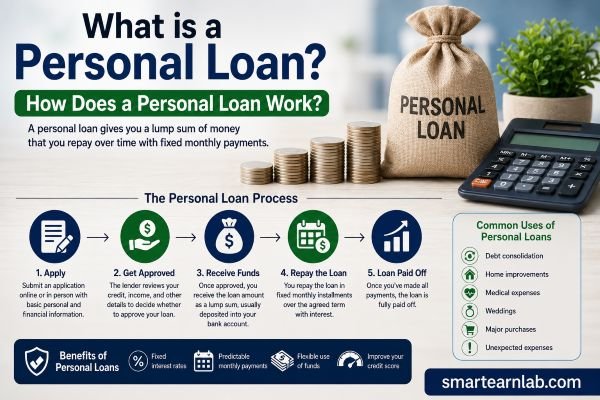
The process for getting a loan is simple.
After you are approved:
1. The lender puts the money into your bank account.
2. You start paying back the loan within 30 days.
3. Your payments include both the amount and the interest.
4. When you finish all the payments the loan is fully paid.
Because the payments stay the same during the loan it is easier to plan your money than with other kinds of loans that have changing rates.
- Main Features of Personal Loans
- Fixed Loan Amount
You get the amount you are approved for at once.
Example:
Approved Loan. $20,000
Funds Received. $20,000 minus any fees
Fixed Monthly Payments
Unlike credit cards the monthly payments usually stay the same during the repayment.
Benefits include:
- Easier to plan your money
- Predictable costs
- No changing minimum payments
- Fixed Interest Rates
Most personal loans have fixed rates, which means you are protected from any increases in interest rates in the future.
Some lenders also offer loans with rates that can change. These are not common.
Flexible Repayment Terms
The time to pay back the loan usually goes from:
Longer repayment periods mean smaller monthly payment but more total interest cover time.
No Collateral Required
Unsecured personal loans do not require anything like a house or a car as security.
However not paying back the loan can still lead to:
Getting contacted by people trying to collect
Lowering your credit score
Legal issues
Types of Personal Loans
Unsecured Personal Loans
The common type. Approval is based on your credit and not on anything you own.
Best for:
- Paying off debt
- Medical costs
- Weddings
- Holidays
- Secured Personal Loans
- These loans need something like:
- Savings accounts
- Cars
Investment accounts
Benefits include:
- interest rates
- Higher chances of being approved
- Amounts you can borrow
- Debt Consolidation Loans
These loans combine several debts into one payment.
Of paying:
- Credit Card A
- Credit Card B
- Personal Loan
Medical Bill
You just make one monthly payment.
Benefits include:
- interest costs
- Easier to manage
- Paying off debt faster
- Emergency Personal Loans
- Emergency care
These loans are for urgent money needs such as:
Home repairs
- Car repairs
- Funeral costs
Many lenders give the money quickly sometimes the same day or the next day.
- Common Uses of Personal Loans
- Debt Consolidation
Paying off debt is one of the things you can do.
Benefits:
- Lower interest rates
- One monthly payment
- cash flow
- Possible improvement in your credit score
- Home Improvement Projects
- Personal loans can help with:
- Kitchen renovations
- Bathroom updates
- Roof repairs
- Heating and cooling systems
- New flooring
Unlike loans that use your home as security, unsecured personal loans do not require you to put your house at risk.
Medical Expenses
- Unplanned medical costs can be tough to handle.
- Personal loans can help with:
- Surgery
- care
Hospital bills
- Fertility treatments
- Eye surgery
Weddings
- Wedding costs can be high.
- Personal loans can help with:
- Venue
- Food
- Photography
- Decor
- Entertainment
- A personal loan can make these costs easier to manage with payments.
- Major Purchases
People often use loans for:
- Furniture
- Appliances
- Electronics
- Motor homes
- Boats
- Education costs
- Emergency Expenses
Money problems can come up suddenly.
Examples include:
- Losing a job
- Water damage
- Repairs after a storm
- Family issues
- Needing to travel
Personal loans can give you quick access to money when you need it most.
- Advantages of Personal Loans
- Predictable Payments
- Fixed payments make it easier to plan your money.
- Lower Interest Than Credit Cards
- People who qualify can get lower rates than standard credit card rates.
Fast Funding
Many online lenders approve applications quickly.
Money can arrive in:
- One business day
- Two business days
- Three business days
Spending Freedom
Most lenders allow you to use the money for almost anything legal.
Credit Score Improvement
Paying on time can help boost your credit by:
- Building a payment history
- Lowering your credit card usage
- Diversifying your credit types
- Potential Disadvantages
- Borrowers should also know the negatives.
Interest Costs
Every loan is more than what you take out.
- Origination Fees
- Some lenders take fees that range from 1% to 12% before giving you the money.
- Credit Score Requirements
- Good rates usually need a credit score.
- Bad scores may lead to
Interest rates
- Lower amounts you can borrow
- Stricter rules
- Missed Payments
Payments can:
- Add extra charges
- Hurt your credit
- Make it harder to borrow in the future
Income
Stable income shows you can pay back the loan.
Common sources include:
- Jobs with a salary
- Hourly work
- Being self employed
- Retirement money
- Disability money
- Debt to Income Ratio
Lower debt to income ratios usually lead to approval chances.
Most lenders like a ratio below 36% to 43%.
Employment History
Having a job shows you are financially stable.
Payment History
A record of paying on time makes it more likely that you get approved and may get an interest rate.
Accept the Offer
Check all the details before signing:
- APR
- Monthly payment
- repayment cost
- Late fees
- Prepayment penalties
Receive Funds
After everything is complete money is usually sent directly to your bank account.
Where Can You Get a Personal Loan?
- Banks
- Best for people who
- Have banking relationships
- Have excellent credit
- Have income
Advantages:
Competitive rates
- Trusted institutions
- Credit Unions
- Credit unions often provide:
- Lower rates
- Lower fees
Personalized service
Membership is usually needed.
Online Lenders
Online lenders offer:
- Faster approvals
- Convenient applications eligibility
- Some are for people with fair or poor credit.
Loan Marketplaces
Loan marketplaces let borrowers compare offer from lenders using one application. This saves time. Helps find good rates and repayment terms.
Tips for Getting the Best Personal Loan.
- Improveing your credit score before applying.
- Lower existing debt to reduce your debt to income ratio.
- Get offer from lenders.
- Pick the repayments term you can afford.
- Do not borrow more than needed.
- Read all the loan terms carefully.
- Always pay on time.
- Think about payments to avoid missing due dates.
- Common Personal Loan Mistakes to Avoid.
- Applying with lenders at once without checking prequalification.
- Not looking at origination fees and other charges.
- Choosing the term just for a lower monthly payment.
- Taking out money for things you do not need.
- Missing payment dates.
- Not comparing interest rates and APRs.
Is a loan the best way to borrow your money?
A personal loan is often an option for peoples who need a set amount of money with regular monthly payments. It works well for things like paying off debt fixing a house handling emergencies and buying items. But the best option depends on your money situation, your credit and what you plan to use the money for.
Can anyone get a loan?
Not everyone is approved away. Lenders look at credit history, income, job and debt before approving a loan. People with financial situations usually get better rates and better terms.
Are loans better than credit cards?
For expenses personal loans are usually cheaper because they often have lower interest rates, set payments and clear monthly amounts. Credit cards are better for spending that can be paid off fast.
When is taking a loan a bad idea?
A personal loan might not be the choice when:
You cannot easily afford the payments.
The loan is for things you do not really need.
You are just swapping one high-interest debt for another.
The interest rate is too high because of credit.
Smart borrowing means having a plan to pay back the money and knowing what you can afford.
Final Thoughts
Personal loans are still one of the flexible and available ways to borrow money. Their set interest rates, monthly payments, flexible use and clear repayment rules make them great for paying for big costs paying off debt handling emergencies and funding important events in life.
To get the most from a loan we suggest improving your credit lowering other debt checking offers, from many lenders and choosing a repayment term that is easy to pay and saves money over time. If you borrow carefully and pay on time a personal loan can be a useful financial tool and also help your credit score in the long run.
What is a personal loan?
A personal loan is when you borrow money from a lender and you have to pay it every month in fixed amounts.
What can a personal loan be used for?
You can use a loan for a lot of things like paying off other debts fixing up your home, medical bills, education or if you have an emergency.
Do I need collateral for a loan?
Most of the time you do not need collateral for a loan because it is usually an unsecured loan.
How is my loan eligibility determined?
When you want a loan the lender will look at your credit score how much money you make, your job and how much debt you already have compared to your income.
What affects the interest rate on a loan?
The interest rate on a loan is affected by your credit history your income, the amount of money you borrow and how long you have to pay it back.
