
Car insurance is more than something you need to drive legally. It is financial protection against accidents theft natural disasters liability claims medical expenses and unexpected repair costs. Choosing the car insurance coverage ensures that you your passengers your vehicle and other road users remain financially protected.
This comprehensive guide explains every types of car insurance optional coverages how they work when they apply and how to choose the right policy for your needs.
Car Insurance Coverage Overview
A. [Car Insurance]
B. [Required Coverage]
C. [Optional Coverage]
D. [Liability Insurance ]
E. [PIP or MedPay]
F. [Uninsured Motorist]
G. [Collision]
H. [Comprehensive]
I. [Gap Insurance]
J. [Roadsides Assistance]
C –> K[Rentals Reimbursement]
C –> L[Glass Coverage]
C –> M[Rideshare Coverage]
C –> N[New Car Replacement]
What Is Car Insurance?
Car insurance is a contract between you or a car insurance company. In exchange for premium payments the car insurance company agrees to pay covered financial losses resulting from accidents theft vandalism weather damage lawsuits medical expenses or other insured events.
The exact protection depends on the types of car insurance coverages included in your policy.
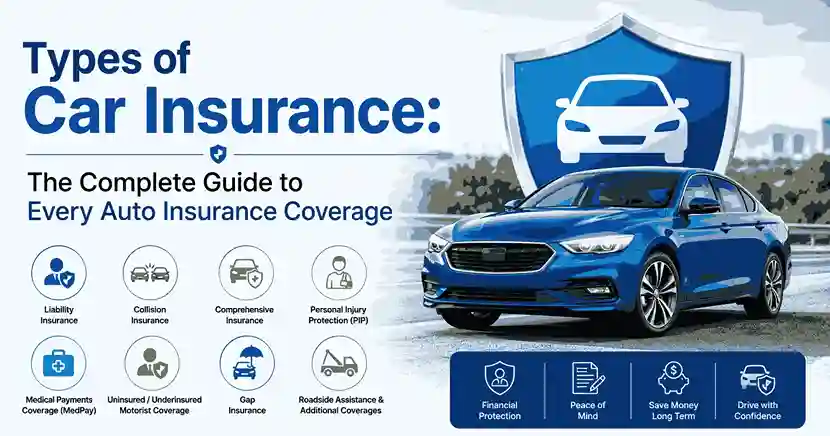
The Six Main Types of Car Insurance
1. Liability Insurance
Liability insurance is the foundation of every auto insurance policy. Is legally required in most places.
It pays for damage or injuries you cause to others. Does not pay for your own vehicle or medical expenses.
Includes
- Bodily Injury Liability
- Property Damage Liability
Covers
- bills
- Hospital expenses
- Legal defense
- Vehicle repairs
- Property damage
Does Not Cover
- Your vehicle
- Your injuries
- Theft
- Fire damage
2. Collision Insurance
Collision coverage can pays for the repair or even replacement of your vehicle after an accident regardless of whoever caused it.
Covered situation include:
- Hitting another vehicle
- Striking a tree
- Colliding with a pole
- Single vehicle accidents
- Rolling your vehicle
Most of the lenders require collision insurance for the financed and leased vehicles.
3.Comprehensives insurances
Comprehensives coverage can also protects against event than collisions.
Examples include
- Theft
- Vandalism
- Fire
- Floods
- Hail
- Storm damage
- Falling objects
- Animal collisions
- Brooked windshields
Comprehensives types of car insurances is also valuable for the vehicles and areas prone to severe weather.
4.Personals Injuries Protection (PIP)
Personal injury protection can pays expenses regardless of who caused the accident.
Coverage can also include
- Emergency treatment
- Surgery
- Rehabilitation
- Lost wages
- Childcare
- household services
- Funeral expenses
PIP is mandatory in many no-fault insurance states.
5.Medical Payments Coverage (MedPay)
MedPay also focuses on medical costs following an accident.
It can pay for
- Ambulances fees
- Hospitals bills
- Doctor visits
- X-rays
- Surgery
- Funeral expenses
Unlike PIP MedPay generally does not cover lost income or childcare expenses.
6.Uninsured and Underinsured Motorist Coverage
Not every driver carries car insurance.
This coverage protects you when another driver:
- Has no car insurance
- Has car insurance
- Flees the accident scene
It may pay for:
- bills
- Lost wages
- Vehicle damage (where applicable)
Additional Types of Car Insurance
Gap Insurance
Gaps insurances can also covers the difference between your vehicles actual cash value and the remaining balance on your auto loan if your car is declared a total loss.
Ideal for
- vehicles
- Small down payments
- Long-term loans
Rentals Reimbursements Coverages
Pays for transportation while your insured vehicle is being repaired.
May include
- Rental vehicles
- Public transportations
- Rides sharing services
Roadsides Assistance
Provides emergency help whenever your vehicle becomes disabled.
Services often include:
- Towing
- tire changes
- Battery jump-starts
- Fuel delivery
- Lockout assistance
- Winching
Auto Glass Coverage
Pays for repair or replacement of:
- Windshields
- Side windows
- Rear glass
Many types of car insurance companies waive the deductible for the windshield repairs.
Accident Forgiveness
Some car insurance companies prevent your premium from increasing after your at-fault accident if you qualify.
New Car Replacements Coverages
of paying your vehicles depreciated value this coverage can replaces your totaled vehicle with a brandnew model of similar specifications.
Mechanical Breakdowns Insurances
Cover mechanical failure such as
- Engine
- Transmission
- Suspension
- Air conditionings
- Electricals systems
Often considered an alternative to extended warranties.
Usage Based Insurances
Telematics technologies and monitors driving habits.
Safe drivers can also receive more discounts based on:
- Mileage
- Braking
- Speed
- Acceleration
- Phone usage
- Time of driving
Drivers working for rides sharing or deliveries platforms often require car insurance because personal auto policies may not provide complete coverage during work activities.
Classic Car Insurances
Designed specifically for vehicles.
Benefits include
- Agreed value coverage
- Flexible mileage limits
- Specialized repairs
- Collectors focused protection
Non Owners Car Insurance
Best for individuals who
- Frequently rent vehicles
- Borrow friends cars
- Do not own a vehicle
Provides liability protection without owning a car.
Optional Car Insurance Add-Ons
Depending on your car insurance company you may also choose
- Custom Parts Coverage
- OEM Parts Replacement
- Loan/Lease Protection
- Key Replacement
- Pet Injury Coverage
- Travel Expense Coverage
- Sound System Protection
- Diminishing Deductible
- Vanishing Deductible
- Tire Protection
What Does Full Coverage Mean?
Although “full coverage” is not a car insurance product it generally refers to a policy that combines
- Liability Insurance
- Collision Insurance
- Comprehensive Insurance
Many drivers also add
- Uninsured Motorist Coverage
- Medical Payments or PIP
- Roadside Assistance
- Rental Reimbursement
Together these provide broad financial protection for most driving situations.
How to Choose the Right Car Insurance
When selecting a policy consider
- Vehicle value
- Loan or lease requirements
- Local car insurance laws
- Driving habets
- Annual milaege
- Weather risks
- Budget
- Family needs
- Repair costs
- Desired deductible
Balancing premiums cost with the protection helps to avoid significant out of pocket expenses after an accident.
Common Mistake to Avoid
- Purchasing mostly minimum required car insurance coverage
- Choosing high deductibles without savings
- Ignoring uninsured motorist protection
- Forgetting gap insurance on financed vehicles
- Not updating policies after modifications
- Missing discounts
- Allowing policies to lapse
Final Thoughts
Understanding every type of car insurance allows drivers to build a policy that matches their vehicle financial situation and risk level. From liability insurance to comprehensive collision and medical protection gap coverage and roadside assistance each policy serves a unique purpose. Reviewing your car insurance regularly or selecting optional coverages helps ensure stronger financial protection greater peace of mind and better long term value.
What is life insurance?
Life insurance provides support to your beneficiaries after your death.
What are the main types of life insurance?
The main types are term life whole life and universal life insurance.
How life insurance do i need?
It depends on your income, debt family needs and future expenses.
What affects life insurance costs?
Age, health, coverage amount, policy type and lifestyle all affect premiums.
How do i choose the life insurance policy?
Compare coverage, costs or policy features and your term financial goals.
