
Term life insurance is meant to offer coverage for a set time, like 10, 20 or 30 years. Your money needs can change as time goes on. If you find that you want coverage for your life, converting term life to whole life insurance might allow you to change your policy into permanent coverage.
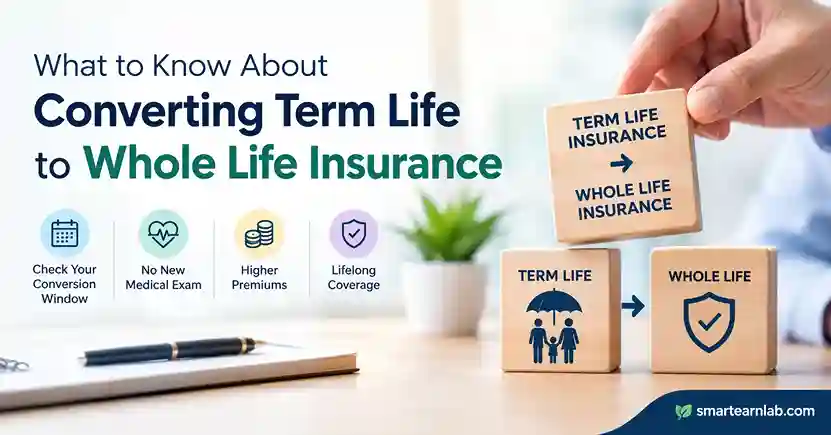
Can You Convert Term Life Insurance to Life?
- Many term life insurance policies have a conversion option that lets you move to a life insurance policy without having to go through the medical underwriting process again.. Conversion rules can be different for each insurance company and each policy.
- Some policies let you convert during a certain time, such as the first five or 10 years, when converting term life to whole life insurance. Other policies might give a time to convert or offer a longer conversion rider for an extra fee.
- Before you convert look at your policy document. Call your insurance agent to make sure your policy can be converted and what dates apply.
How Does Term Life Conversion Work?
- The conversion process is usually simple. First, reach out to your insurance agent or the insurance company when converting term life to whole life insurance. They can check if you are still eligible and tell you which permanent policies are available.
- You likely won’t need a medical exam. Your health status usually does not impact the conversion, which’s great if you have had health issues since you bought your term policy.
- You might also be able to convert part of your coverage. For instance if you have a $1 million term policy you could change $500,000 to insurance and keep the other $500,000 as term coverage.
- The insurance company will figure out a premium based on the permanent policy and your current age when converting term life to whole life insurance. Since permanent insurance gives coverage for your life and can build cash value the premium is usually much bigger than your original term insurance premium.
What If Whole Life Insurance Is Too Expensive?
If the new premium is too much for your budget, converting term life to whole life insurance may not be the right choice, but there are other options to consider. One choice is to convert part of your term coverage. This can offer some coverage while keeping costs lower.
Another choice is to get quotes for a permanent life insurance policy from other companies. A new policy might be cheaper. You might need to go through medical underwriting and meet current health requirements.
Pros and Cons of Converting
Converting term life to whole life insurance has benefits. You can usually skip a medical exam, switch to permanent coverage more easily, and maybe convert just part of your death benefit.
There are downsides too. Conversion periods can be short premiums can be much higher. The permanent policies you can get depend on your insurance company.
When Should You Think About Conversion?
Conversion might be an idea if you want coverage for your whole life need to leave money for your family want a policy that can grow cash value or have health issues that could make getting a new policy hard.
Before you decide compare the conversion premium with quotes for permanent policies and think about your long-term money goals.A financial expert can also help you figure out whether converting term life to whole life insurance, another permanent policy, term insurance, or a mix of policies is right for you.
FAQs
Can I convert term life insurance to life insurance?
Yes many term life insurance policies offer a conversion option that allows you to switch to life coverage.
Do I need an exam to convert term life insurance?
Usually no. Many conversion options allow you to convert coverage without taking a medical exam.
When can I convert term life insurance?
You can typically convert your policy during a conversion period mentioned in your insurance policy.
Yes whole life insurance generally has premiums, than term life insurance because it provides lifelong coverage.
Is converting term life to life insurance worth it?
It can be worth it if you want coverage and the ability to build cash value over time.
