
Managing business credit card debt can become costly when high interest keeps growing. The Best Business Balance Transfer Cards can help us combine debt and lower interest costs during an introductory period.
What Is a Business Balance Transfer Card?
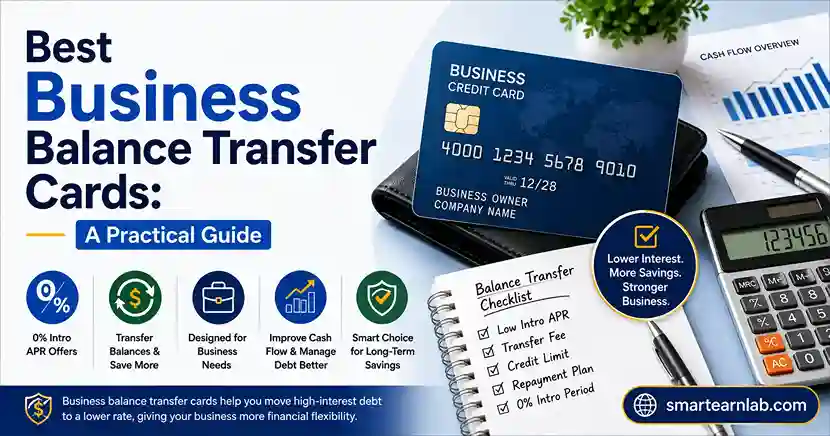
A business balance transfer card lets us move debt from another credit card into a new account. Some cards offer a 0% introductory APR for a fixed period giving us time to lower the transferred balance without interest charges.
A balance transfer can help when our current debt has an APR. For example transferring $10,000 with a 3% fee adds $300 to the balance. If we spread $10,300 over a 15‑month period we would need to pay about $687 each month to clear the debt before the introductory rate ends.
How We Compare Business Balance Transfer Cards
- We should evaluate each card against our business repayment plan of choosing an offer only because of the headline APR. Key factors include:
- Introductory balance transfer APR: A longer 0% period can give us time to repay debt.
- Balance transfer fee: A percentage fee raises the amount we owe away.
- Regular APR: Any balance left after the promotional period may earn interest at the rate.
- Annual fee: A card with no fee can make debt consolidation cheaper.
- Credit requirements: Issuers may check credit when we apply for a small‑business card.
- Transfer rules: We should confirm balances, limits and the deadline for requesting transfers.
How to Choose a Business Balance Transfer Credit Card
First, we should calculate how much debt we want to transfer. Next, we should compare the introductory period and the monthly payment needed to eliminate the balance. When choosing the Best Business Balance Transfer Cards, a longer introductory period is valuable only when it supports a realistic payoff schedule.
We should also check whether the transfer fee offsets the interest savings we expect. We should calculate the numbers of assuming the fee is worthwhile.
How We Can Maximize a Balance Transfer
Once a transfer is completed we should avoid purchases on the account. New spending can make repayment harder. May have different APR terms. Setting monthly payments can help us stay on schedule and prevent missed‑payment penalties.
We can use the opportunity to strengthen business credit by managing the account. Paying on time, keeping balances low, and following the issuer’s terms can support credit habits with the Best Business Balance Transfer Cards.
Business Balance Transfer Card Payoff Plan
[Review Debt] –> [Compare Offers]
–> [Calculate Fees]
–> [Transfer Eligible Balance]
–> [Make Monthly Payments]
–> [Pay Before Intro APR Ends]
The Bottom Line
The best business balance transfer card matches our debt amount, repayment timeline, credit profile and business needs. We should prioritize an introductory period, a reasonable transfer fee, low ongoing costs and a manageable repayment goal. Before applying, we should calculate the cost and create a payoff plan so the Best Business Balance Transfer Cards promotional period becomes a tool for reducing debt instead of a reason to postpone repayment.
FAQs
What are business balance transfer cards?
Business balance transfer cards let us move existing business credit card debt to another card with a lower introductory APR.
How can a balance transfer help a business?
A balance transfer may lower interest costs. Give us more time to pay down high‑interest debt through a structured repayment plan.
Do business balance transfer cards charge fees?
Many cards charge a balance transfer fee based on the amount transferred. We should check the card’s terms. Calculate the fee before moving a balance.
How long does a 0% balance transfer period last?
The promotional period varies by card. Some offers give months of 0% APR while others may give a longer introductory period.
What happens when the promotional period ends?
Once the introductory period ends the card’s regular APR usually applies to any remaining balance. Having a repayment plan can help us avoid interest costs.
