
Choosing the best credit card for you becomes much easier when we match the card to our credit score, spending habits, financial goals, fees, interest rate, and rewards preferences. Instead of choosing a card because of a large welcome bonus or attractive advertisement, we can compare the features that actually affect our finances.
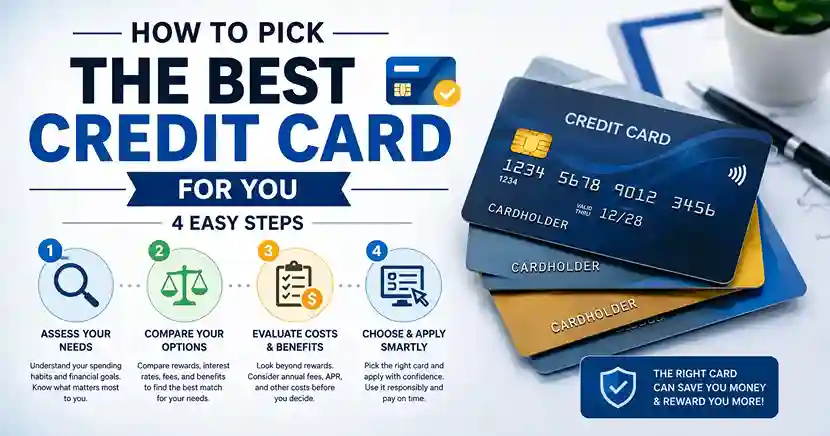
Here are four practical steps for finding the right credit card.
1. Check your credit score before applying
How to pick the best credit card for you starts with understanding your credit score and credit report. Your credit profile can help determine which credit cards you may qualify for. Cards designed for excellent credit often provide stronger rewards or lower introductory rates and better benefits or while secured and credit building cards may be more suitable for people with limited or damaged credit.
Before applying, review your credit score and credit reports for inaccurate information. Checking your credit profile can also help you avoid applying for cards that are unlikely to approve you.
Remember that every credit card application can result in a hard credit inquiry, so comparing eligibility requirements before applying is an important step.
2. Choose the right type of credit card
The best credit card depends on what we want the card to accomplish.
Credit building cards
If we are new to credit or rebuilding our credit history a secured credit card or student credit card may be appropriate. Secured cards typically require a refundable security deposit while student cards are designed for people beginning their credit journey.
We should look for cards that report payment activity to the three major credit bureaus and have reasonable fees.
0% APR and balance transfer cards
If our primary goal is reducing interest costs we can consider a 0% introductory APR card or balance transfer credit card. These cards can provide a temporary period without interest on qualifying balances.
We should compare the length of the introductory period, balance transfer fee, regular APR, and what happens after the promotional period ends.
Cash back and rewards credit cards
For people who pay their balance in full every month, cash back, travel and rewards cards can provide value on everyday purchases.
We should choose rewards based on our actual spending. A card offering 5% on a category we rarely use may be less valuable than a simple card offering consistent rewards on purchases we make regularly.
3. Compare the most important card features
After identifying the right card category we should compare several important features rather than focusing on one benefit.
Annual fee
An annual fee can be worthwhile when the card’s rewards and benefits exceed the cost. However a no annual fee card may be better when we do not use enough benefits to justify paying a yearly charge.
APR and interest costs
The annual percentage rate matters most when we carry a balance. A rewards card with an attractive bonus can become expensive if high interest charges accumulate.
Rewards structure
We should examine:
- Cash back rates
- Points or miles earned
- Bonus categories
- Welcome bonus requirements
- Redemption options
- Reward expiration rules
- Spending limits and restrictions
Foreign transaction fees
If we frequently travel internationally or make purchases from foreign merchants a card with no foreign transaction fee can help reduce unnecessary costs.
Credit limit and other fees
We should also review late payment fees, balance transfer fees or cash advance fees, foreign transaction fees, and other charges before applying.
4. Choose the card with the highest overall value
Once we have narrowed our the choices we can compare the cards side by side and determine which one provide the strongest overall value.
A simple comparison should consider:
Check Credit Score –> Identify Financial Goal
–> What Do We Need?
–> Build Credit
–> Save on Interest
–> Earn Rewards
–> Compare Fees and Credit Building Features
–> Compare APR and Balance Transfer Terms
–> Compare Rewards and Benefits
–> Calculate Overall Value
–> Choose the Best Fit Credit Card
We should not automatically choose the card with the biggest sign up bonus. A smaller bonus combined with lower fees, better everyday rewards or more useful benefits may produce greater long term value.
Credit card comparison checklist
Before submitting an application we should ask:
- Does the card match our credit profile?
- Is there an annual fee?
- What is the regular APR?
- How long does the introductory APR last?
- Are there balance transfer fees?
- Does the rewards program match our spending?
- Is there a foreign transaction fee?
- What spending is required for the welcome bonus?
- Are there important restrictions on rewards?
- Does the card provide benefits we will actually use?
What to do after choosing a credit card
Finding the right card is only the beginning. We should pay bills on time keep balances manageable and the avoid spending more simply to earn rewards.
For people carrying debt, paying the balance down should generally take priority over chasing rewards. For those using a rewards card, paying the statement balance in full each month can help prevent interest charges from eliminating the value of the rewards.
Final takeaway
The best credit card is not necessarily the card with the biggest bonus, highest rewards rate or most impressive benefits. It is the card that fits our credit profile or spending patterns, financial goals and ability to manage payments.
By checking our credit, identifying the right card type or comparing fees and features and calculating long term value we can make a more informed decision and choose a credit card that works for our financial situation.
FAQs
How do i choose the best credit card for me?
Consider your spending habits, credit score or the financial goals, rewards, fees and interest rate before choosing a card.
What should i look for in a credit card?
Look at the APR, annual fee, rewards or welcome bonus, credit limit and other benefit.
Should i choose a rewards credit card?
A rewards card can be a good choice if you regularly use the card and can pay your balance on time.
Is a credit card with no annual fee better?
Not always a card with an annual fee may offer better rewards or benefits that outweigh the cost.
How does my credit score affect my credit card options?
Your credit score can affect which card your qualify for and the interest rate or terms you may receive.
