Understanding current student loan interest rate is essential before borrowing for college. The interest rate determines how much a student ultimately pay beyond and the amount originally borrowed. In 2026–27 federal student loan rates differ by loan type while private student loan rates depend largely on creditworthiness and the lender.
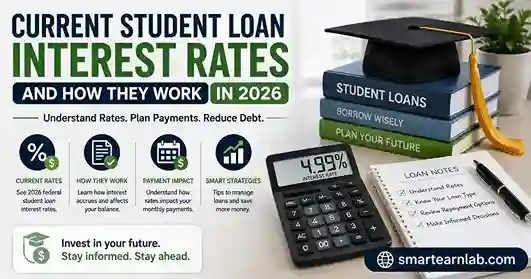
Current federal student loan interest rates for 2026–27.
For new federal student loan issued from July 1, 2026 through June 30, 2027.
Federal student loan rates are fixed for the life of each loan. This means the interest rate does not change after the loan is issued making monthly payments easier to predict.
Federal rates are set annually using a formula tied to the 10-year Treasury note, with additional percentage points determined by federal law.
Private Student Loan Interest Rates
Private student loan rates vary considerably between lenders and borrowers. Depending on credit history, income or loan term and other factors, borrowers may qualify for either fixed or variable rates.
Current ranges can include approximately:
Fixed private loans: 2.50%–23.07%
Variable private loans:3.38%–21.94%
The lowest advertised rates generally require strong credit and may also require a qualified cosigner.
Fixed vs. Variable Student Loan Rates
A fixed interest rate remains unchanged throughout repayment. A variable rate can increase or decrease according to market conditions, potentially changing the monthly payment and total borrowing cost.
A[Student Loan] –> B[Federal]
A –> C[Private]
B –> D[Fixed Rate]
C –> E[Fixed Rate]
C –> F[Variable Rate]
D –> G[Predictable Payments]
E –> G
F –> H[Rate Can Change]
How Student Loan Interest Works
Interest generally accrues while a student is in school although certain subsidized federal loans receive special treatment. Unpaid interest can eventually be capitalized meaning it is added to the principal balance and can cause borrowers to pay interest on a larger amount.
We can reduce long-term costs by paying accrued interest before capitalization when financially possible.
How to Lower Student Loan Interest Costs
We should consider several strategies.
1. Prioritize federal loans because they can offer valuable borrower protection.
2. Compare private lenders carefully before borrowing.
3. Consider autopay discounts when available.
4. Make additional principal payments when other high-priority debts and emergency savings are adequately covered.
5. Compare refinancing offers if we have strong credit and understand that refinancing federal loans into private loans can eliminate federal protections.
How to Apply for Student Loans
We should begin by completing the FAFSA and reviewing available federal financial aid. After determining the federal amount available private student loans can be considered only if additional funding is necessary.
Comparing interest rates, fees, repayment terms and borrower protections helps us choose financing that fits our long term financial situation.
FAQs
What are student loan interest rates in 2026?
Federal rate vary by loan type private rate vary by lender.
How does student loan interest work?
Interest accrues based on your loan balance and the interest rate.
Are federal loan rates fixed?
Yes federal student loan rates are generally fixed for the life of the loan.
What affects private loan rates?
Credit score, lender, loan term and financial profile.
Can I reduce my interest costs?
Yes. Paying extra toward principal can reduce total interest.
