
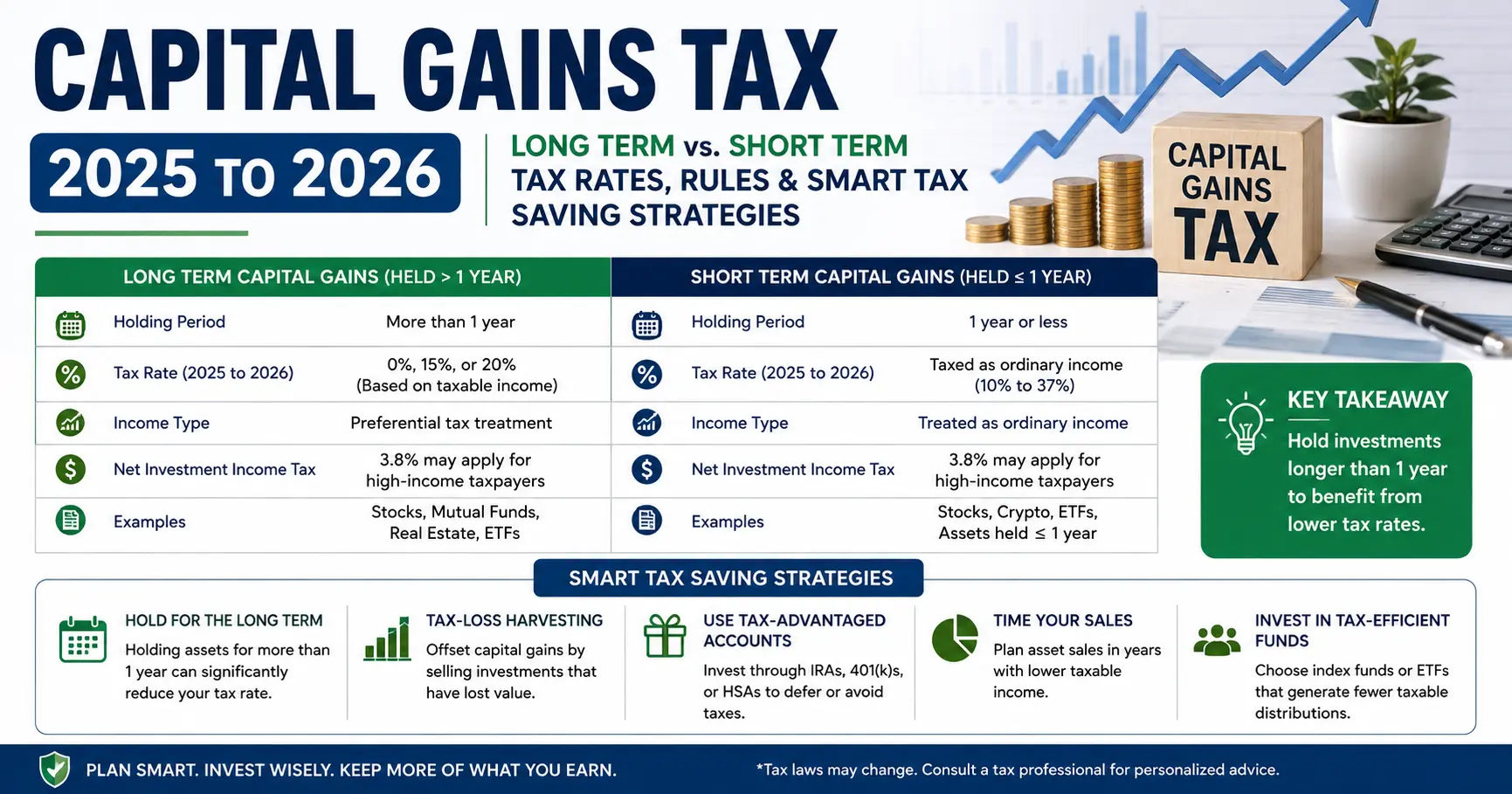
Capital gains tax is something that investors really need to know about. When we sell things like stocks real estate, cryptocurrency, mutual funds or other investments we might have to pay capital gains tax on the profit we make. The amount of tax we pay depends on how we owned the investment how much money we make and our filing status. Understanding these rules can help us pay tax and keep more of our investment money.
What Is Capital Gains Tax?
Capital gains tax is a taxs on the profit. We make when we sell an investment for more than we paid for it.
This includes things like
- Stocks and ETFs
- Bonds
- Cryptocurrency
- funds
- Investment real estate
- Valuable collectibles
If we sell an investment for less than we paid for it we might have a capital loss. This can help reduce the tax we pay on our gains.
Long term capital gains are usually taxed at a rate than short-term gains. This makes it a good idea to hold onto our investments for than a year.
Capital Gains Tax Rates for 2025 to 2026
people will pay one of three tax rates on their long term capital gains:
- 0% if we do not make a lot of money
- 15% if we make an amount of money
- 20% if we make a lot of money
Short term capital gains are taxed like income and the tax rate can be as high as 37%.
Assets Subject to Capital Gains Tax
We have to pay capital gains tax on things like
- Stocks
- Cryptocurrency
- Real estate investments
- Exchange Traded Funds (ETFs)
- funds
- Business assets
- Precious metals
- Fine art and collectibles
Some retirement accounts like 401(k)s and IRAs let our investments grow without paying tax until we take the money out.
We can reduce our capital gains tax in ways
1. Hold Investments Longer
If we own an investment for than a year we will pay a lower tax rate.
2. Invest Through Tax Advantaged Accounts
Using retirement accounts can help our investments grow without paying much tax.
3. Use Tax Loss Harvesting
If we sell an investment that did not do well we can use the loss to reduce our gains. If our losses are bigger than our gains we can also reduce our taxable income by up to $3,000.
4. Take Advantage of the Home Sale Exclusion
If we sell our home we might not have to pay capital gains tax on the profit. We can exclude:
- Up to $250,000 if we are single
- Up to $500,000 if we are married and file our taxes together
We have to have owned and lived in the home for least two of the last five years.
5. Plan Investment Sales Carefully
If we spread out the sales of our investments over years we might be able to pay a lower tax rate.
Capital Gains Tax Calculation Process
Final Thoughts
Capital gains tax is an important thing to think about when we are investing. If we understand the rules and use strategies like holding our investments for a time using tax-advantaged accounts and planning our sales carefully we can pay less tax and keep more of our investment money. This can help us have wealth and better financial outcomes in the long run. Capital gains tax plays a role in investing so it is a good idea to learn as much as we can about capital gains tax. By doing this we can make decisions about our investments and our money. We will be able to keep more of our capital gains and pay less in taxes, which a great thing for our financial future.
FAQs
What is capital gains tax?
It is the tax paid on profit from selling an asset.
What is a long term capital gain?
A profit from an asset held for more than one year.
What is short term capital gain?
A profit from an asset held for one year and less.
Which taxs rate is lower?
Long terms capital gains usually have lower tax rates.
How can reduce capital gains tax?
Hold investment longer and use tax saving strategies.
