
Pawn shop loans can be a way to get cash quickly without needing a traditional credit check. We use something we own as collateral get a loan based on its value and then get the item back after paying the loan plus interest and any fees. However pawn shop loans can be costly. If we don’t repay the loan, we might lose the item permanently.
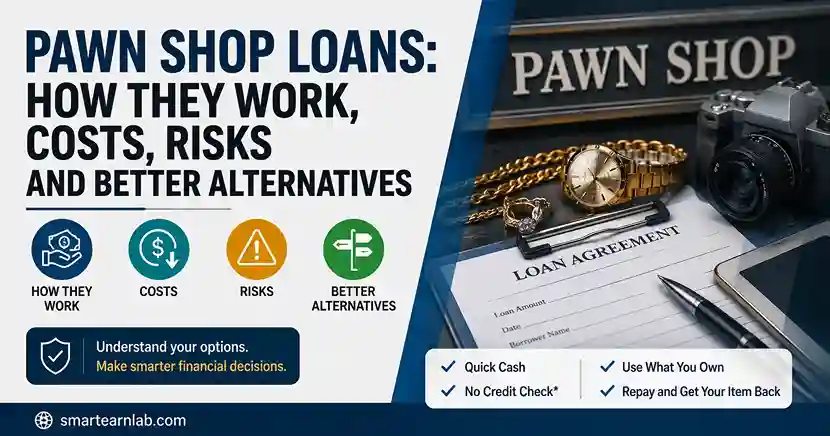
What is a pawn shop loan?
A pawn shop loan is a secured short term loan that is backed by personal property. Common items used as security include jewelry, electronic devices or musical instruments, collectibles, tools, watches and other valuable things.
The pawn shop looks at the item. Offers a loan that is usually less than what it could be sold for. If we agree the shop holds onto the item while we get the money and a loan agreement that explains when we need to pay back how much the interest. What fees apply.
Loan terms can vary from state to state and from one pawn shop to another. Short repayment periods like 30 or 90 days are usual. Some shops might allow us to extend the loan by paying the fees.
How do pawn shop loans work?
The process is usually simple:
1. We take an item to a pawn shop.
2. The person working at the shop checks how good the item is and how much it is worth.
3. We get a loan offer.
4. If we say yes we leave the item as a guarantee. Get money.
5. We pay back the money we borrowed the interest and any fees by the deadline.
6. After paying all we get our item back.
If we don’t pay back the pawn shop can sell the item to get their money back.
How much does a pawn shop loan cost?
The total cost can be much higher than the amount we borrow. We should look at the interest rate, finance charges, storage fees, service fees, renewal fees and the total amount we will need to pay back before taking a loan.
For example borrowing $300 at a monthly rate can quickly make the amount we owe much more. A loan that seems okay at first can become very expensive if we keep renewing it.
Since pawn loans rules are different in each state we should check the rules and the details the pawn shop gives us.
What happens if we cannot repay a pawn loan?
The main danger is losing the item we used as a guarantee. Unlike a loan the pawn shop already has the item that is the guarantee for the debt.
So we should not pawn anything that would be hard or impossible to replace items that have a lot of emotional value.
A pawn loan also generally does not help us build credit because the payments are not usually reported to the credit agencies the way traditional credit accounts are.
Advantages of pawn shop loans
Pawn loans can have some things:
- No traditional credit check might be needed.
- Approval can be quick.
- We can borrow using something we already have.
- Bad credit might not stop us from getting approval.
- The loan is backed by the item we give not our credit history.
These things can make pawn loans good when we need money and don’t have other choices.
Risks of pawn shop loans
Before borrowing we should think about:
- High costs: Fees and interest can make paying expensive.
- Losing the item: Not paying back could mean we lose the item.
- Short time to pay: We might not have time to get the money.
- Renewing the loan: Extending the loan can cost overall.
No help for credit: Pawn loans usually don’t help build credit the way traditional loans do.
Better alternatives to pawn shop loans
Before using a pawn shop loan we should look at options and compare them based on how much they cost and how long we have to pay.
Personal loans
A personal loan might let us borrow money and have regular payments. People with not credit might still find options through credit unions, local banks or online lenders.
Credit union payday alternative loans
Some credit unions offer Payday Alternative Loans (PALs) that have set terms and limits on interest rates, which can be safer than short-term loans.
Secured credit cards
If our goal is to build or fix credit of getting quick money a secured credit card might be better. These cards need a deposit that can be returned and can help build a payment history when used correctly.
Emergency savings
For problems building even a small emergency fund can help us avoid high-cost short-term loans.
Bottom line
A pawn shop loan can get us money without needing a good credit history but convenience has costs and risks. Before taking one we should calculate how much we will need to pay back understand the date and the rules for renewing and think about what happens if we can’t pay.
If we have choices comparing a personal loan, credit union loan and secured credit card or an emergency savings plan might help us find a better option. Importantly we should never pawn something we can’t afford to lose.
FAQs
What is a pawn shop loan?
A pawn shop loan is a short term secured loan where you use a valuable item as collateral in exchange for cash.
How does a pawn shop loan work?
The pawn shop evaluates your item, offers a loan amount and holds the item as collateral. You get it back after repaying the loan, interest and applicable fees.
Do pawn shops check your credit?
Usually pawn shops do not require a traditional credit check because the loan is secured by your collateral.
How much can you borrow from a pawn shop?
The amount depends on the value or condition and resale potential of the item you provide as collateral.
What happens if you don’t repay a pawn loan?
If you don’t repay the loan according to the agreement the pawn shop may keep and sell your collateral or subject to the applicable laws.
